
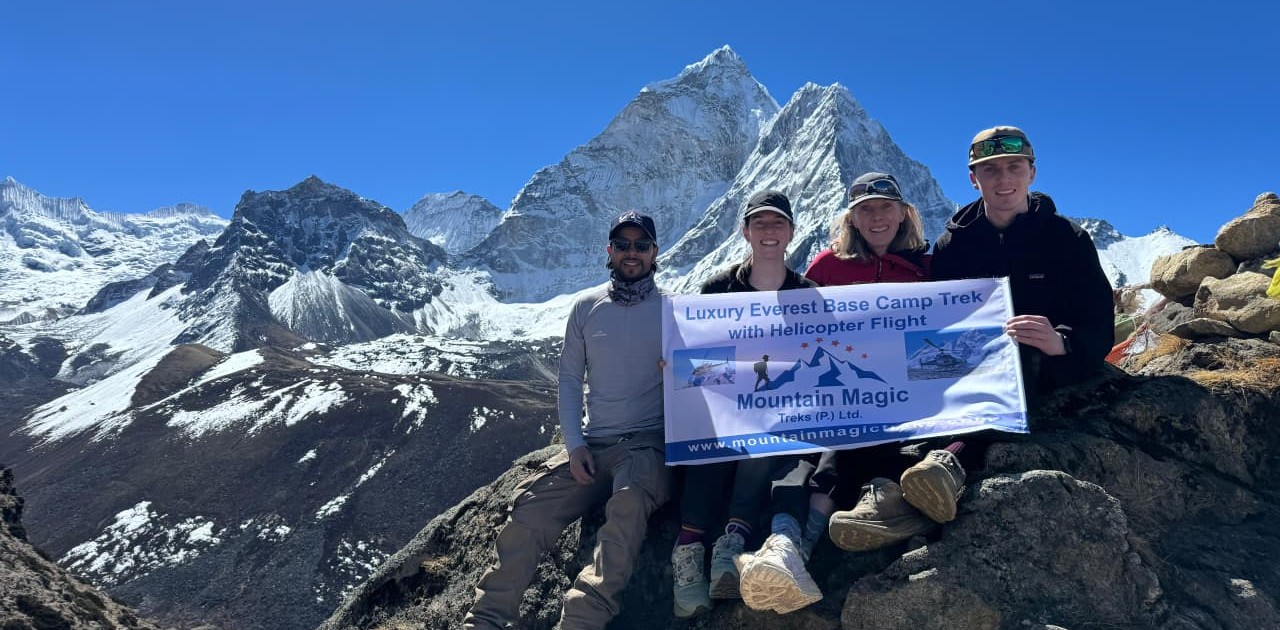
For many travelers, Everest is more than a mountain on a map. It represents a personal challenge and the chance to experience a part of the world that feels completely different from everyday life. The journey through the Khumbu region brings you closer to that dream one day at a time.
The Everest Base Camp Trek with helicopter return gives you the chance to walk through this remarkable region, reach Everest Base Camp, and then return by helicopter rather than spending several more days on the same trail. The flight depends on weather, visibility, and safe operating conditions.
If you want an Everest adventure with a different style of return, this trek can offer a useful balance between trekking and convenience.
Understand What Makes Khumbu Special
The Khumbu region is not just a route toward Everest.
It has its own communities, traditions, landscapes, and way of life.
Look Beyond the Famous Peak
You will see much more than Mount Everest.
The journey includes rivers, forests, stone villages, suspension bridges, monasteries, glaciers, and other Himalayan peaks.
The variety keeps the trek interesting from beginning to end.
Begin Your Walking Adventure in Lukla
Lukla is the starting point for the classic Everest trekking route.
After arriving, the first section feels quite different from the high mountain areas shown in photographs.
Enjoy the Green Valleys
Lower elevations have more trees and vegetation.
The trail winds through small settlements and follows mountain rivers.
Use these early days to settle into your walking rhythm.
There is no need to hurry.
Make the Trail Part of the Experience
A common mistake is to think only about the destination.
If you spend every day asking how many hours remain until the next village, you can miss what is happening around you.
Notice the Sounds
Listen to the river.
Hear the footsteps of other trekkers.
Notice bells from animals moving along the trail.
Pay attention to the wind through the trees.
These simple details make the journey feel real.
Reach Namche With Patience
The trail becomes steeper as you approach Namche Bazaar.
Crossing suspension bridges and climbing through the valley can be tiring.
When Namche finally appears, it feels like a major achievement.
Use Your Time for Acclimatization
Namche is an important place to slow down.
A planned acclimatization day gives your body time to adjust to the altitude.
You can take a short hike or explore nearby areas without pushing yourself too hard.
Rest is part of the trek.
Discover the Spiritual Side of the Region
Buddhist culture is visible throughout the Everest area.
Prayer flags hang across trails and bridges. Mani walls and prayer wheels appear near villages.
Treat Religious Sites Carefully
If you visit a monastery, behave quietly and follow local instructions.
Do not assume every location is open for photographs.
Respecting local traditions helps protect the places that make the Everest region unique.
Tengboche Brings a Sense of Calm
Tengboche is one of the most memorable villages on the route.
The monastery and surrounding mountains create a peaceful setting.
Take a Break From the Schedule
After hours of walking, you may be tempted to eat and immediately prepare for the next day.
Instead, take some time to enjoy where you are.
Look across the valley.
Talk with other travelers.
Enjoy a warm drink.
You are not likely to remember how quickly you finished the day, but you may remember the view.
Dingboche Signals Higher Altitude
The route toward Dingboche takes you into a more open landscape.
The trees become fewer, and the mountains begin to dominate the horizon.
Accept a Slower Pace
At this elevation, your body has to work harder.
Do not worry if your normal walking speed disappears.
Short steps and regular rests are completely normal.
The Everest Base Camp Trek with helicopter return should be approached with patience, especially during the higher sections.
Stay Warm as You Climb
The higher parts of the trail can become very cold.
The temperature may feel comfortable during sunny afternoons but drop sharply after sunset.
Layer Your Clothing
Instead of wearing one heavy layer all day, use several layers that you can add or remove.
Keep gloves, a warm hat, and an outer jacket easy to reach.
Good clothing is not about looking impressive. It is about staying comfortable.
Gorakshep Is the Last Major Stop
Gorakshep sits close to Everest Base Camp.
The village feels remote, and the surrounding terrain is harsh compared with the green lower valleys.
Prepare for the Final Push
The walk from Gorakshep to Base Camp can be tiring.
The distance is not the only challenge. The altitude and uneven ground also affect how you feel.
Focus on one section at a time.
Eventually, you will reach the famous destination.
Stand at Everest Base Camp
Everest Base Camp is the main goal for most trekkers on this route.
Make the Moment Yours
There is no correct way to celebrate.
Take photographs.
Sit quietly.
Talk with your guide.
Look toward the glacier.
Think about the days you spent walking to get there.
The achievement belongs to you, so enjoy it in your own way.
Return Through the Sky
The biggest change comes after your trekking experience.
Instead of walking all the way back through the Khumbu Valley, the Everest Base Camp Trek with helicopter return allows you to return by helicopter, subject to safe flight conditions.
Compare the Two Perspectives
Walking lets you understand the trail from ground level.
You see each bridge, village, hill, and bend in the path.
The helicopter gives you a completely different view.
From above, the route becomes one connected landscape.
You can see valleys stretching between mountain ridges and the tiny trails that seemed so large while you were walking.
Travel Responsibly in the Mountains
The Everest region receives many visitors each year.
Every traveler has a role in protecting it.
Leave the Trail Cleaner
Carry your waste with you when proper disposal is not available.
Avoid damaging plants or local structures.
Use water carefully.
Respect wildlife and local communities.
Responsible travel helps keep the region beautiful for future visitors and the people who live there.
Make the Journey About More Than Everest
The name of the trek may focus on Everest, but the experience includes many other things.
Remember the People
Your guide may teach you about the mountains.
A lodge owner may prepare your evening meal.
A porter may carry supplies that make your journey possible.
Take time to appreciate these people.
They are an important part of the story.
Final Thoughts
The Everest Base Camp Trek with helicopter return gives travelers a chance to experience the Khumbu region from several perspectives.
You begin among green valleys and forests, walk through Sherpa villages, cross suspension bridges, visit Tengboche, acclimatize around Namche and Dingboche, and continue into the high mountain landscape.
After reaching Everest Base Camp, you can climb Kala Patthar for another memorable Himalayan view.
Then comes the helicopter return.
Instead of spending several more days retracing the trail, you can rise above the mountains and see the route from the air.
That combination makes the journey different from a standard round-trip trek.
It still demands preparation, patience, and respect for altitude. But for travelers who want a rewarding Everest experience while saving time on the return, it can be an excellent way to explore the Himalayas.
Frequently Asked Questions
What is included in the Everest Base Camp Trek with helicopter return experience?
The journey includes trekking through the Khumbu region to Everest Base Camp followed by a helicopter return, depending on weather and flight conditions.
Is the route suitable for beginners?
Beginners can take on the trek with proper preparation, fitness, acclimatization, and guidance.
Why is Namche an important stop?
Namche provides an important opportunity to acclimatize and adjust before continuing to higher elevations.
What is special about Kala Patthar?
Kala Patthar is a high viewpoint with broad views of Everest and surrounding peaks.
Can helicopter flights be delayed?
Yes. Weather, visibility, and other mountain conditions can affect helicopter operations.
Why should I keep extra time in my schedule?
A flexible schedule protects you from problems caused by unexpected weather or flight delays.
